
What Makes a Neighborhood Attractive to Buyers
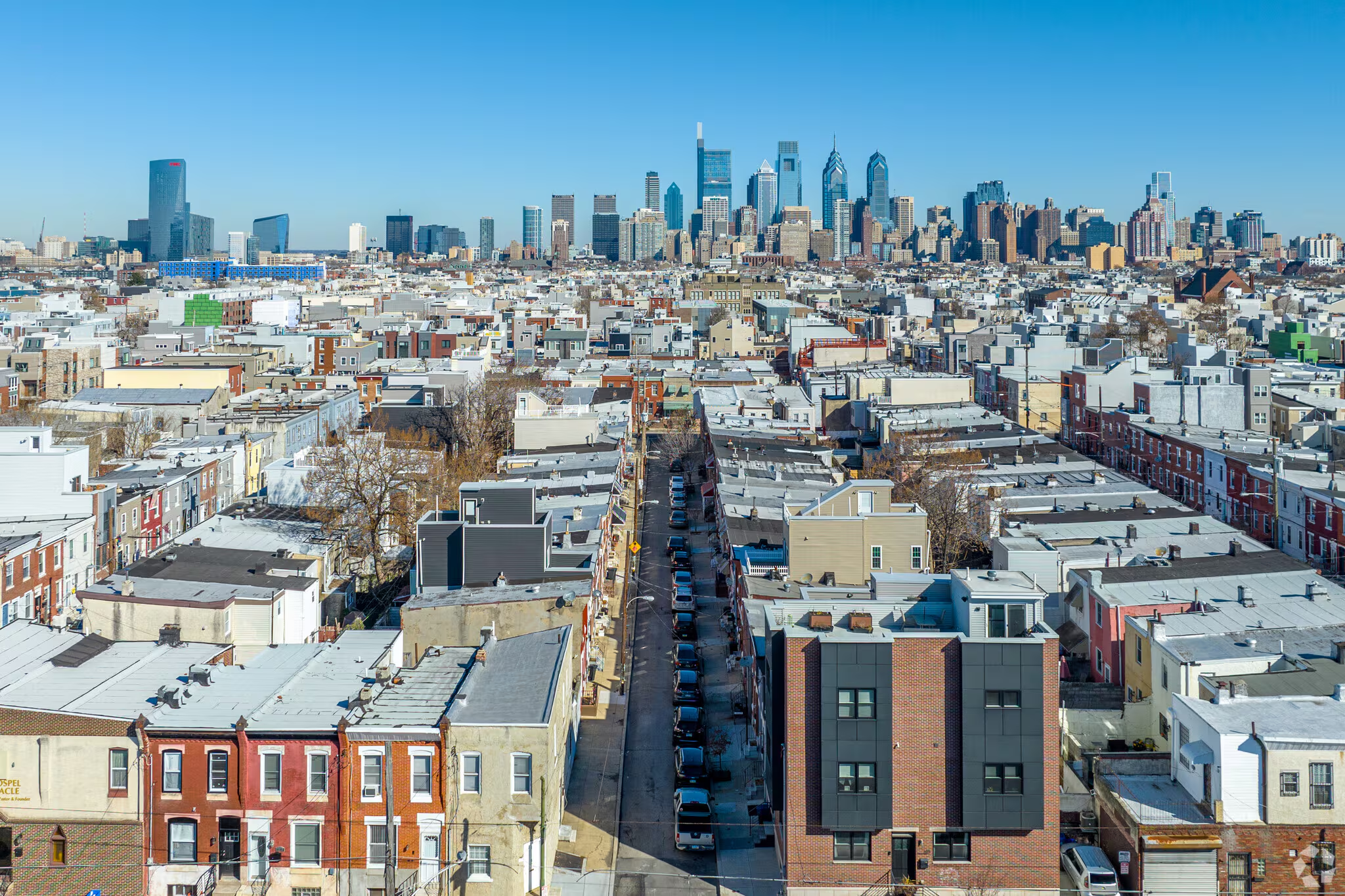
A great neighborhood does not announce itself with a perfect entrance sign or a row of freshly painted fences. It reveals itself in the small things people notice before they admit they are falling for a place. An Attractive Neighborhood feels safe without feeling closed off, lively without feeling noisy, and practical without feeling dull. Buyers may start with square footage and price, but they often make the emotional decision on the street, at the corner store, or during the quiet drive out. That is where confidence forms. For sellers, agents, and local businesses, understanding this pull matters because neighborhood appeal shapes demand long before a buyer reaches the offer stage. Even visibility tools such as real estate brand exposure can help communities and property professionals tell a better story when the place itself already gives people a reason to care. The real question is not whether a neighborhood looks good in a listing. The question is whether it feels like a life someone can picture living.
Why Daily Convenience Shapes an Attractive Neighborhood
Convenience sounds plain until you watch a buyer test-drive a future routine in their head. They are not only asking whether a grocery store exists nearby. They are asking whether Tuesday night after work will feel manageable, whether school drop-off will become a daily fight, and whether a weekend errand will eat half the day. A neighborhood becomes desirable when it quietly removes friction from ordinary life.
Walkable amenities make daily life feel lighter
Walkable amenities carry more weight than many sellers realize because they turn a location into a rhythm. A café within reach, a pharmacy down the road, a small market around the corner, and a park close enough for an evening loop all send the same signal: life here will not require a car key for every minor need. That signal matters because buyers do not only buy property. They buy back time.
The appeal grows stronger when those places feel genuinely useful, not decorative. A street with one trendy coffee shop but no practical services may photograph well, yet it can feel thin after the first week. A stronger setup gives people a mix of daily stops, casual gathering places, and small comforts that support real routines. Walkable amenities work best when they serve both convenience and mood.
There is a quiet psychology at play here. When buyers see people walking dogs, carrying groceries, chatting near a bakery, or pushing strollers without stress, they read the area as livable before anyone says a word. That kind of neighborhood appeal cannot be faked by staging the house. It lives outside the front door.
Commute access matters more than distance alone
Commute access is not only about miles on a map. Ten miles on a clear route can feel easier than four miles through constant bottlenecks, awkward turns, and unpredictable delays. Buyers know this because they have lived it. A home can lose charm fast when every morning begins with irritation.
Strong commute access gives buyers a sense of control. Nearby public transit, reliable road links, bike paths, and flexible route options all reduce the feeling of being trapped. This matters for remote and hybrid workers too, because fewer office days often make people less tolerant of painful travel when they do need to go in.
The counterintuitive truth is that buyers may accept a slightly longer commute if it feels predictable. Predictability beats raw distance. A neighborhood that lets people plan their day without constant traffic surprises often feels more stable, and stability is one of the strongest forms of comfort a location can offer.
Safety, Cleanliness, and the Signals Buyers Read First
Once convenience draws interest, buyers begin scanning for signs of care. They may not say it out loud, but they notice whether sidewalks are maintained, whether lighting feels adequate, whether lots look abandoned, and whether public spaces invite normal use. Safety is not only a crime statistic in a report. It is a lived feeling created by hundreds of small cues.
Safe streets create confidence before facts do
Safe streets make buyers slow down instead of tense up. Good lighting, visible homes, maintained crossings, calm traffic, and active sidewalks create an environment where people feel watched over without feeling watched. That balance matters. A place can feel secure and still feel open, neighborly, and relaxed.
Buyers often form this impression before they research anything formal. They watch whether children ride bikes, whether people sit on porches, whether older residents walk alone, and whether storefronts stay active into the evening. These signs do not replace data, but they shape the emotional first read of an area. Safe streets begin as a feeling and later become a reason.
A neglected-looking block can work against even a beautiful home. Buyers may wonder who takes responsibility when things go wrong. That question is hard to erase because it touches something deeper than appearance. People want to believe their future neighborhood can hold itself together.
Clean public spaces suggest shared pride
Clean public spaces tell buyers that people care when nobody is forcing them to care. A tidy pocket park, trimmed verges, swept sidewalks, and maintained benches signal shared standards. They suggest that residents, local services, and property owners all have some stake in the area’s condition.
This does not mean a neighborhood needs to look polished to perfection. Too much polish can feel sterile, especially to buyers who want character. The stronger appeal often comes from places that feel lived in but cared for. A mural with fresh paint, a playground with worn but working equipment, or a community noticeboard full of local events can say more than a spotless but empty plaza.
Here is the part many people miss: cleanliness affects trust. When buyers see small neglect everywhere, they start expecting larger neglect behind the scenes. When they see care in public spaces, they become more willing to believe the area has healthy habits. That belief can move them closer to commitment.
Community Character Turns Location Into Belonging
A buyer can like a house and still hesitate if the surrounding area feels anonymous. Belonging is harder to measure than commute time, but it has power because people want more than shelter. They want a place that reflects who they are becoming. Strong community character gives a neighborhood emotional texture, and that texture often separates a place people admire from one they pursue.
Local identity gives buyers a story to join
Local identity helps buyers understand what kind of life an area supports. A neighborhood with a Saturday farmers market, family-run restaurants, independent shops, local sports fields, or annual street events gives people a story they can step into. That story makes the area easier to remember after a day of touring properties.
Generic places struggle here. When every road feels interchangeable and every retail strip looks copied from somewhere else, buyers have little to hold onto. Local identity creates hooks. It gives people details they repeat later: the corner bakery, the shaded trail, the small cinema, the school fundraiser banners, the street where everyone seems to know the crossing guard.
An Attractive Neighborhood does not need to be flashy. It needs to feel specific. Specificity gives buyers confidence that the place has roots, habits, and a personality strong enough to survive beyond market trends.
Neighbor connection affects long-term comfort
Neighbor connection does not require everyone to become close friends. Most buyers are not searching for forced social life. They are looking for a setting where basic goodwill exists, where people wave, share practical information, respect boundaries, and notice when something seems off.
That kind of connection becomes especially important for families, retirees, first-time buyers, and anyone moving from far away. A friendly block lowers the emotional cost of change. It helps a buyer imagine the first month after moving, not only the day they collect the keys.
The unexpected point is that privacy and connection can strengthen each other. A healthy neighborhood does not demand constant interaction. It gives people the option to belong without pressure. Buyers respond to that because it feels mature, stable, and human.
Future Value Depends on Balance, Not Hype
After buyers feel the charm, they start thinking like investors. They may love the tree cover, the school nearby, or the short walk to dinner, but they still want to know whether the area will hold value. Future value rarely comes from one loud selling point. It comes from balance: steady demand, useful services, sensible growth, and a sense that the neighborhood can improve without losing itself.
Good schools and services protect demand
Good schools remain one of the strongest demand drivers because they attract more than families with children. Buyers without kids often understand that school reputation supports resale strength. Even when education is not their personal priority, they know the next buyer may care deeply.
Services matter in the same practical way. Healthcare access, libraries, recreation centers, childcare options, and reliable local maintenance all support property value because they support daily life. A neighborhood with strong services feels less risky. Buyers can imagine staying longer because their needs have room to change.
Still, school ratings alone do not carry a neighborhood forever. Buyers also look at how the area functions around those schools. Traffic flow, safe crossings, after-school options, and nearby green space all affect the lived experience. A strong school in a stressful setting loses part of its shine.
Thoughtful growth beats quick excitement
Thoughtful growth gives buyers confidence that a neighborhood has momentum without becoming unstable. New shops, improved sidewalks, renovated public spaces, and restored older buildings can all raise interest when they fit the area’s character. Growth works when it adds value to daily life rather than chasing attention.
Fast hype can make buyers cautious. If every conversation centers on sudden price jumps, luxury projects, and “the next big area,” people may wonder whether the neighborhood is becoming less livable while becoming more expensive. That tension matters because buyers do not want to purchase into a place that feels like it is being flipped around them.
The best neighborhoods age with intention. They allow new energy while protecting the qualities that made people care in the first place. That balance makes an Attractive Neighborhood easier to trust, and trust is what turns interest into action.
Conclusion
The most appealing neighborhoods do not rely on one perfect feature. They win buyers through a chain of quiet confirmations: the errand that feels easy, the street that feels cared for, the park that feels used, the neighbor who gives a small nod, the school route that makes sense, and the growth that feels measured instead of frantic. Buyers read all of this faster than they can explain it. That is why location decisions often feel emotional, even when they are built from practical evidence. An Attractive Neighborhood gives people more than a good address; it gives them a believable future. Sellers should study the area around the home with the same seriousness they give the home itself, because the street may be doing half the selling before the front door opens. Start by walking the neighborhood like a buyer would, notice every signal that creates comfort or doubt, and shape your property story around the life the area already supports.
Frequently Asked Questions
What makes a neighborhood attractive to home buyers?
Convenience, safety, cleanliness, local character, strong services, and future value all shape buyer interest. A neighborhood becomes more appealing when daily life feels easier and the area shows clear signs of care, stability, and healthy demand.
How do walkable amenities affect neighborhood appeal?
Walkable amenities make routines simpler and help buyers picture life beyond the house. Nearby cafés, shops, parks, and services create a stronger sense of place because they reduce dependence on driving and add daily comfort.
Why do safe streets matter when choosing a neighborhood?
Safe streets give buyers confidence before they study deeper details. Good lighting, calm traffic, visible activity, and maintained sidewalks help people feel comfortable walking, parking, and living in the area across different times of day.
Do good schools increase neighborhood value?
Good schools often support stronger demand because many buyers connect school quality with long-term resale strength. Even buyers without children may value a respected school district because future buyers are likely to consider it important.
How can public spaces influence buyer decisions?
Public spaces show how well a neighborhood is cared for. Clean parks, usable benches, maintained paths, and active gathering areas suggest shared pride, which helps buyers trust the surrounding environment.
What role does commute access play in buying a home?
Commute access affects daily stress and long-term satisfaction. Buyers often prefer areas with predictable routes, transit options, and manageable travel times because an easier commute makes the whole home feel more practical.
How does local character make a neighborhood stand out?
Local character gives buyers something memorable to connect with. Independent shops, community events, historic details, and familiar gathering spots make an area feel distinct rather than interchangeable with every other location.
What signs show a neighborhood has strong future potential?
Steady improvements, useful new services, maintained homes, active public spaces, and balanced development all suggest healthy future potential. Buyers trust neighborhoods that grow without losing the qualities that made them appealing.